
 Get a Quote


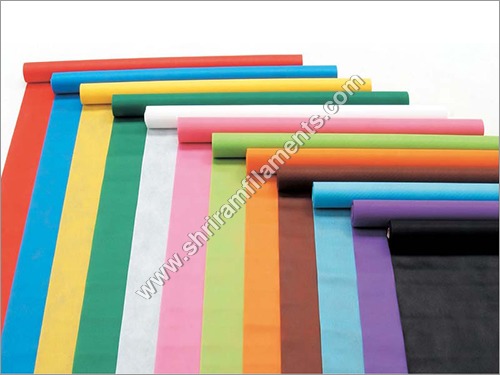
Nonwoven Fabric for 8 to 300 GSM
140 INR
Product Details:
- Length As per customer requirements; Rolls of 10-500 meters
- Color White, Blue, Black, Green, Custom colors
- Shrinkage Low (<2%)
- Fabric Capacity Large-Scale Bulk Production
- Yarn Count N/A (Nonwoven fabric)
- Yarn Type N/A (Nonwoven)
- Pattern Plain / Embossed / Dotted / Cross / Customized
- Click to view more
X
Nonwoven Fabric for 8 to 300 GSM Price And Quantity
- 140 INR
- 100 Kilograms
Nonwoven Fabric for 8 to 300 GSM Product Specifications
- Store in dry & cool place, avoid direct sunlight, do not iron
- Large-Scale Bulk Production
- 8 Gram per cubic centimeter(g/cm3)
- N/A (Nonwoven fabric)
- N/A (Nonwoven)
- Plain / Embossed / Dotted / Cross / Customized
- 8-300 GSM
- Spunbond / Thermal Bond / Chemical Bond
- Spunbond, Needle Punch, Thermal Bonded, Chemical Bonded
- Eco-Friendly, Breathable, Lightweight, Water Resistant, Tear Resistant, High Tensile Strength
- Nonwoven
- As per customer requirements; Rolls of 10-500 meters
- Plain / Printed / Embossed
- 100% Polypropylene (PP) or Polyester
- Customizable; Standard width: 36-120 inches
- White, Blue, Black, Green, Custom colors
- 36 to 120 inches (900-3000 mm)
- All Seasons
- Soft, Smooth, Non-irritant
- Multiple colors (White, Blue, Black, Green, Custom)
- Low (<2%)
- Excellent; Adjustable as per GSM
- 500-1000 kgs per color/thickness
- PE/PP film lamination available
- Available on request
- Optional as per requirements
- Hydrophobic/Hydrophilic as per requirement
- 7-15 days based on order quantity
- 5000 Tons/Month
- Available as per order
- Custom as per length/GSM
- Reusable & Disposable options
- Roll packed with Poly wrapping or as required
- Medical, Hygiene, Agriculture, Packaging, Home Textile, Filtration, Construction, Automotive
Product Description
Within a short span of time, we have emerged as one of the foremost exporters of an excellent stock of Nonwoven Fabric for 8 to 300 GSM. Produced from high quality polypropylene fibres, these textiles are needle punched. These fabrics retain their dimensional stability and are resistant to damage from construction stresses. Our range of Nonwoven Fabric for 8 to 300 GSM is available in varying strengths and thicknesses. It is high in demand in civil environmental engineering and construction projects.
Uses:
- In various erosion control measures, these are used for preventing soil movement
- Ideal for separation and stabilization in road and railway construction
High Performance and Customization
Our nonwoven fabrics deliver superior breathability and durability with adjustable air permeability as per GSM requirements. Customers can select various finishes, textures, and colors as well as opt for flame retardant, UV-resistant, water-repellent, or antibacterial properties. Each roll is produced under strict quality controls and tailored for specific use cases, ensuring optimal performance for your intended application.
Application Versatility for Multiple Industries
From medical and hygiene products to agriculture, filtration, packaging, home textiles and more, these nonwoven fabrics are engineered to meet diverse application needs. With multiple bonding technologies (spunbond, thermal bond, chemical bond) and styles (plain, embossed, printed), our offerings are ideal for demanding environments, helping ensure product safety, cleanliness, and reliability across industries.
Flexible Supply and Reliable Logistics
With a robust production capacity of 5000 tons per month, we cater to large-scale bulk orders. Custom roll diameters, widths, and packaging options provide flexibility for various operational requirements. Short lead times (7-15 days) and a minimum order quantity of 500-1000 kgs per color/thickness guarantee prompt fulfillment and efficient delivery for global clients.
FAQs of Nonwoven Fabric for 8 to 300 GSM:
Q: How does the air permeability of nonwoven fabric adjust according to GSM?
A: Air permeability is controlled through the GSM (grams per square meter) of the fabric. Higher GSM yields denser material with reduced airflow, while lower GSM increases breathability. We tailor air permeability as per client requirements to suit specific usages.Q: What application areas are suitable for this nonwoven fabric?
A: This fabric is ideal for medical, hygiene, agriculture, filtration, packaging, construction, home textiles, and automotive sectors due to its versatility, customizable properties, and safety features.Q: When can optional features like UV resistance, flame retardancy, or antibacterial treatment be added?
A: Optional features such as UV resistance, flame retardancy, and antibacterial properties can be incorporated during the manufacturing process based on customer specifications provided at the time of order.Q: Where is your nonwoven fabric produced and shipped from?
A: We are an exporter, manufacturer, and supplier based in India with global shipping capabilities. Products are packed securely in rolls with poly wrapping or as per client requirements for safe delivery.Q: What is the process for customizing roll diameter, color, or pattern?
A: Customization options for roll diameter, color, and pattern can be specified at order placement. Sizes, thickness, colors (white, blue, black, green, or custom) and patterns (plain, embossed, dotted, cross, or customized) are produced as per your exact needs.Q: How is this fabric typically used and what benefits does it offer?
A: Usage spans from disposable medical masks, gowns, agricultural crop covers, filtration layers, packaging, to home furnishings. Benefits include high tensile strength, water and tear resistance, breathability, eco-friendliness, and adaptability for reusable or disposable applications.Q: What are the storage and handling instructions for nonwoven fabric rolls?
A: Store nonwoven fabric rolls in a dry and cool place away from direct sunlight. Avoid ironing, and handle with care to maintain fabric integrity and properties during storage and transport.Tell us about your requirement

Price:
Quantity
Select Unit
- 50
- 100
- 200
- 250
- 500
- 1000+
Additional detail
Mobile number
Email

Other Products in 'Non Woven Fabric' category


Contact Details
GST : 06AAJFS3238F1Z9

- Plot No. 65-66, Sector-21, Industrial Area, Bhiwani - 127021, Haryana, India
- Phone : 08045478690
- Mr Raman Aggarwal (Partner)
- Mobile : 08045478690
- Mr. Gourav Aggarwal (Partner)
- Mobile : 08045478690
- Send Inquiry
- Mobile :+919315607101,9812533381
Unit -2nd Address : Shri Ram Fabric, Plot No. 101, Sec-26, Industrial Area, Bhiwani
 Send Inquiry
 Send Inquiry
 Send SMS
 Call Me Free
SHRI RAM FILAMENTS
All Rights Reserved.(Terms of Use)
Developed and Managed by Infocom Network Private Limited.
Developed and Managed by Infocom Network Private Limited.

